

Dr. Abhinandan Sadalge
Consultant - Urology
MBBS; MS (General Surgery); M.Ch. (Urology)


Dr. Anand Utture
Consultant - Urology
MBBS; MS (General Surgery); DNB (Genito Urinary Surgery); M.Ch. (Urology); FICS
Urology
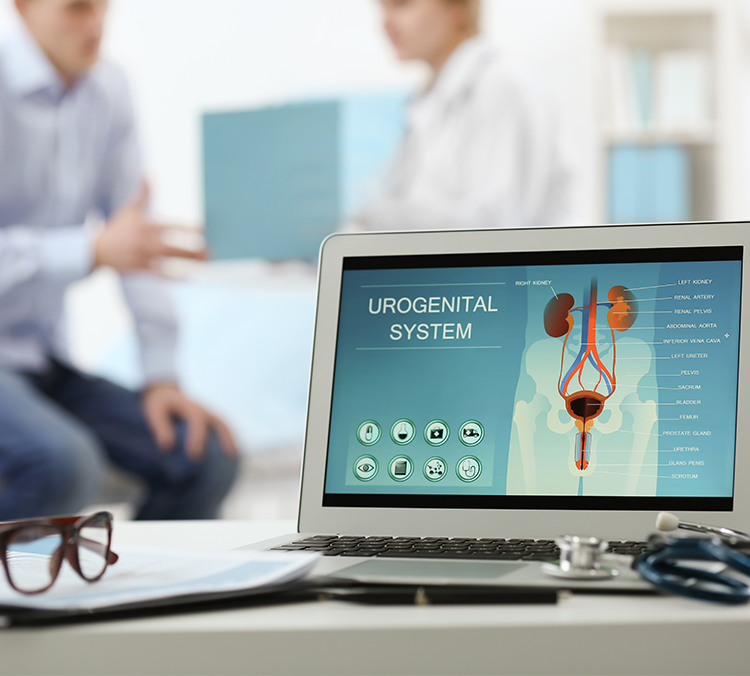
Urology deals with diseases of the male and female urinary tract (in males urinary diseases also affect the male reproductive organ). Urology is a surgical specialty and deals with a wide range of clinical problems.
- Prostate cancer
- Kidney stones
- Bladder cancer
- Bladder prolapse
- Hematuria (blood in the urine)
- Erectile dysfunction (ED)
- Interstitial cystitis (also called painful bladder syndrome)
- Overactive bladder
- Prostatitis (swelling of the prostate gland)
Prostate biopsy: A procedure to remove samples of tissue from the prostate for examination in a lab.
UroLift: A minimally invasive procedure done in-office to treat mild to moderate prostate enlargement.
Transurethral needle ablation (TUNA): A procedure that uses radiofrequency ablation to shrink prostate tissue that is pressing into the urethra and causing urinary symptoms.
Transurethral resection of the prostate (TURP): A minimally invasive procedure that uses a special instrument called a resectoscope to trim and seal prostate tissue when the prostate is enlarged causing difficulty in urination.
Transurethral incision of the prostate (TUIP): A procedure used to treat benign prostatic hyperplasia (BPH). A small endoscope is inserted through the urethra and special instruments create small openings in the bladder neck where it connects to the prostate. This opens the urinary channel so urine can pass.
Vasectomy - Vasectomy is a surgical procedure used for permanent male birth control. During the procedure, the doctor cuts off the supply of sperm to the semen by cutting and sealing the vas deferens, which carry sperm from the testicles.
Cystoscopy - A cystoscopy is a urology procedure that allows a urologist to examine the lining of the bladder and the urethra. An instrument called a cystoscope is inserted into the urethra and guided to the bladder. The cystoscope is made up of a long, thin tube with a light and a camera at the end. This procedure is commonly used to diagnose and treat bladder conditions. It can also be used to diagnose an enlarged prostate.
Ureteroscopy - Ureteroscopy is a procedure used to diagnose and treat kidney stones. A special instrument called a ureteroscope (a long, thin tube with a light and camera) is guided through the urethra and the bladder and up the ureter to where the kidney stone is located. Small stones can be removed whole, while larger stones need to be broken up. The procedure used to break up the stones is called lithotripsy.
Lithotripsy – A urology procedure that uses shock waves or a laser to break down stones in the kidney, bladder, or ureter. The laser or shock waves break up large stones so that they can pass through the urinary system.
Prostatectomy: This procedure removes the entire prostate. It may be performed to treat prostate cancer or benign prostatic hyperplasia.
Biopsy: A prostrate biopsy is essential to diagnose the chances of prostate cancer. This is a minor surgical procedure in which a few suspected cancer cells are removed for examination and testing. Biopsies may be performed by endoscopy, while others are performed under image guidance, such as with ultrasound, computed tomography (CT) or magnetic resonance imaging (MRI) technology.