 Share
ShareChildhood Cancer - What Are The Most Common Types, Symptoms, and Treatment Options
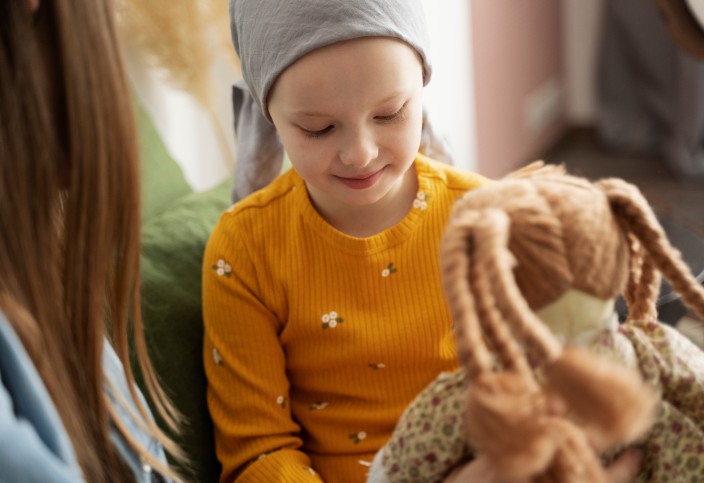
Childhood cancer is rare but impactful, affecting an estimated 400,000 children and adolescents worldwide each year, according to the World Health Organization (WHO). It refers to a group of cancers that develop in children aged 0 to 19.
Childhood cancer differs significantly from adult cancer. While cancers of the oral cavity, lung, ovary are commonly seen in adults, children often have leukemia, lymphoma and brain tumours. Many childhood cancers respond very well to treatment, with some achieving cure rates as high as 90%.
In this article, we will learn about the different types of childhood cancer and the available treatment options.
Types of Common Cancers in Children
The most frequent forms of pediatric cancer include leukemia, brain and central nervous system tumors, and lymphomas. Together, these account for a majority of childhood cancer diagnoses.
- Leukemia is the most common cancer among children. It begins in the bone marrow, where blood cells are produced. Abnormal white blood cells multiply rapidly which decreases the number of other normal blood cells. This leads to symptoms such as fatigue, pale skin, easy bruising, fever, and bone pain. Acute lymphoblastic leukemia (ALL) is the most prevalent subtype and responds well to chemotherapy.
- Brain and central nervous system tumors are the second most common type. These tumors arise within the central nervous system and interfere with normal brain or spinal cord function. Headaches that worsen in the morning, vomiting, unstable gait and co ordination, weakness in limbs, changes in vision are some of the concerning symptoms. Treatment often includes surgery, followed by radiation or chemotherapy, depending on the tumor's location and type. Targeted therapy is available for certain type of brain tumours.
- Lymphomas arise from the lymphatic system which includes network of lymph nodes, spleen, tonsils and bone marrow and is an integral part of the body’s immune system. They are classified as Hodgkin or Non-Hodgkin lymphoma. In addition to fever, weight loss, night sweats, lymphomas can present as painless swellings in the neck or armpit, compressive symptoms like chest discomfort, noisy breathing, abdominal distention, constipation depending on the involved part of the body. Most lymphomas respond favourably to chemotherapy. Radiation is usually avoided in children but may be necessary in a few cases.
Apart from these, other solid tumors commonly seen in children include
- Neuroblastoma – Arises commonly from adrenal gland and presents as an abdominal mass.
- Wilms' tumour – Arises from one or both kidneys and presents as a painless abdominal mass and blood in urine.
- Retinoblastoma – Tumour involving the eye. Early signs include a “white reflex” in the pupil or squint.
Advances in paediatric oncology have improved treatment success rates for these cancers when it is correctly and timely diagnosed.
Symptoms and Causes
Symptoms of childhood cancer are challenging since they may mimic common infections. Some warning signs that should not be ignored include:
- Unexplained weight loss
- Persistent fatigue or paleness
- Frequent fevers or infections
- Unusual bleeding or bruising
- Headaches accompanied by early-morning vomiting
- Consistent pain in bones or joints
- Lumps, swelling, or visible masses on the body
- Vision changes or squint
In adults, many cancers can be linked to lifestyle or environmental exposures. However, in children most cancers result from developmental errors in cell growth. Around 10-15 % can be attributed to inherited genetic conditions such as Li-Fraumeni syndrome, Down syndrome, or Beckwith-Wiedemann syndrome which are known as “cancer predisposing syndromes”.
Treatment Options
Effective childhood cancer treatment depends on the type, location, and stage of the disease. Paediatric oncologists use a combination of therapies for the best outcomes with an emphasis on minimizing long-term side effects.
Chemotherapy
It is the most common cancer treatment that uses medications to destroy fast-growing cancer cells. Pediatric protocols are specifically designed to ensure precise dosing and reduce side effects. Most often, children tolerate chemotherapy better than adults owing to their higher healing capacity, lack of comorbidities (like diabetes, high blood pressure) and better drug metabolism.
Radiation therapy
This modality uses high energy rays generated from a machine to kill tumour cells
Surgery
Used in most solid tumours with or without chemotherapy
Stem cell transplant
Can be autologous (patient’s own cells) or allogenic (cells from donor). Used in certain leukemias and high risk solid tumours like neuroblastoma.
Immunotherapy and targeted therapy
These advanced approaches train the immune system to attack cancer cells or target specific genetic mutations.
Cellular therapy
CAR-T cells are patients own lymphocytes which are engineered to attack tumour cells. Currently approved in B cell acute lymphoblastic leukemia.
Is Childhood Cancer Curable?
Yes it is, depending upon the type and stage. Acute lymphoblastic leukemia, the most common pediatric cancer, now has cure rates of up to 90%.
In high-income countries, more than 80 percent of children with cancer are cured, according to the World Health Organization (WHO). In India, survival rates vary between 40 and 60 percent, as shown in data from the Indian Council of Medical Research and The Lancet Oncology, largely due to late detection and limited access to specialized care in several regions.
Early diagnosis improves survival chances significantly. Unlike adults, children can’t be screened for cancer. The only way to catch it early is through awareness and timely medical attention.
What Is the Life-Expectancy of a Childhood Cancer Survivor?
With improved therapies, many survivors of childhood cancer go on to live long, fulfilling lives. However, they need follow-up care to monitor for potential late effects of treatment, such as growth impairment, heart problems, hormonal imbalances, or secondary cancers. Medical advancements in treatment have reduced such long-term complications and survivors are now able to live normal lives.
The life expectancy of survivors depends on factors like the type of cancer, treatment intensity, and individual health response. Regular health check-ups, healthy nutrition, and psychological support are important throughout recovery and adulthood. Early rehabilitation and survivorship programs help children transition back to school and social life after treatment.
Conclusion
Cancer in children is overwhelming for any family, but with early detection and access to specialized medical care, there is a hope of a cure and steady recovery. The journey requires medical expertise, compassion, and consistent follow-up to ensure your child’s long-term well-being.
At Hinduja Hospital Khar, our paediatric oncology specialists provide comprehensive care that covers diagnosis, treatment, and emotional support for young patients and their families. If your child shows persistent or unusual symptoms, schedule a consultation to get a timely evaluation and expert guidance.
Frequently Asked Question (FAQs)
What are the early warning signs of childhood cancer?
According to the World Health Organization (WHO), early signs include unexplained weight loss, consistent fever, unusual lumps, easy bruising, prolonged fatigue, or vision changes. Any persistent or unexplained symptom should be checked by a paediatrician.
How do kids with cancer feel?
Children often feel anxious, scared, or upset during treatment as their routines change. Regular counselling and family support play a key role in helping them adjust and recover.
Submit your query